
Commercial Heritage Award

Auckland’s VOS Boatyard Restoration
Rod Marler is so passionate about the Vos boatyard, he is eyeing it up for his own office when it’s finished in the summer of 2018. But then, he concurs, so might half of creative Auckland. And most likely too, it will be THE place for events and functions, especially when the America’s Cup boats arrive in New Zealand.
The Vos wooden boatshed and slipway reaches into the water on reclaimed land in Hamer Street at the edge of Wynyard Wharf.
As Auckland’s last remaining wooden boatyard, it’s unique.
The Vos boatyard was established in the 1930s by the enormously skilled and entrepreneurial Percy Vos, who forged his business Vos & Brijs Boats against the odds and created one of the best known and most successful boat building brands in the country. Vos was one of the early greats of New Zealand’s marine industry, a trail blazer for future tradesmen and business owners. Not only was he renowned for the quality of his boats – from large ferries and tugs to pleasure craft, yachts and dinghies – but he was also a brilliant businessman. A sartorial gentleman with high standards in a cut-throat world, he was highly respected by all who came into contact with him.
1YA Radio Station Building, (University of Auckland)
The former 1YA Building was purpose-built in 1934 as a radio broadcasting station, housing the first licensed radio station in New Zealand. It is a strikingly original structure, located on a ridge overlooking the commercial centre of Auckland. Designed with thick walls and a lack of external windows to prevent the transmission of sound, the building was one of a number commissioned by the Broadcasting Board to meet the rapid development and popularity of radio. Before the advent of television, radio was a significant force in the social and political life of the country.
The brick building was designed by the prominent local practice of Wade and Bartley, who had overseen the construction of other structures linked with technological advances in Auckland (see 'Landmark House'). Using a fortress-like Romanesque style on the exterior to mark it out as a new type of structure, the interior of the studios was inspired by Art Deco design, emphasising the progressive aspects of technology. Its single-storey frontage masks the large size of the interior, which contains several floor levels terraced into a descending slope. The later use of the building reflected changes in the form of public broadcasting, and in 1960 it became the first operational television station for the New Zealand Broadcasting Service. For a while it was the largest television studio in the country, before being vacated by Television New Zealand in 1989. In 2000-2001, the building was converted by the University of Auckland for use in teaching the performing arts, and it also houses an art gallery. Original elements in the foyer were conserved, although much of the remainder of the interior required modification.

.png)
Custom House (Former)
This historic place was registered under the Historic Places Act 1980. The following text is the original citation considered by the NZHPT Board at the time of registration.
The former Customhouse was designed by Thomas Mahoney, the second generation of an important architectural practice. French Renaissance in style it bears a strong resemblance to the Marshall and Snelgrove building in Oxford Street, London, which must have influenced Mahoney when on a trip to Britain in the 1880s.
Built between 1888 and 1889 the Customhouse is related to the City Art Gallery in age and style. But Mahoney's composition is constrained by an inner city site and it is less varied than that of the Gallery. It has a tower which rises one floor above the main façade. Mahoney, create maximum vitality within a shallow plane by introducing attached columns on the recessed parts of the wall and by using pilasters on the projecting pavilions and tower. The ornamental treatment of the two street facades, combined with numerous windows and a balustrade, which marks the junction between the walls and pavilion roofs, lend a Victorian character to the Customhouse. The extravagance of the workmanship and materials reflects the affluence and optimism of the city when it was feeling its commercial strength.
The Customhouse became obsolete seventy years later but was saved from demolition through the concerted efforts of the local people and organisations with help from and American businessman. It has been restored and reused as a combined cultural and commercial centre.
It is significant as having been a major public building of the colonial era - an impressive piece of architecture rich in townscape quality.
Tourist Attraction Award

Domain Wintergardens
The Domain Wintergardens combine New Zealand's natural and cultural heritage, consisting of structures displaying a variety of native and exotic flora in the Auckland Domain. They were originally started during the First World War to commemorate the success of the Industrial, Agricultural and Mining Exhibition of 1913-1914, held on the same site. Profits from the exhibition were used to create sports fields, and to erect a Temperate - or Cool - House in 1916-1921 for the year-round display of flowering plants. Other parts of the Wintergardens were planned at the same time, but not carried out until the late 1920s, when a Tropical House, Fernery and connecting courtyard were added. The gardens provided a focus for promenades in the winter months and were part of the gentrification of the park, which had earlier been seen as a haunt of 'undesirables'. The Domain had been set aside as Crown land in 1841 and enshrined as a place of public recreation in 1844.
The structures were designed by William Henry Gummer and Charles Reginald Ford, who were among the leading architects of their day. The Temperate and Tropical houses are barrel-vaulted steel and glass structures, arranged symmetrically on either side of the complex. They are separated by the enclosed courtyard, while the Fernery occupies a more irregular grotto setting to the rear. The courtyard contains a number of statues, added in 1945, and a sunken pond that was modified in 1954. Each structure within the Wintergardens was designed to display different types of flora, the Temperate House having exotic potted plants and the Tropical House more permanent plantings, such as banana and ravanela (traveller's palm). The fernery is notable for its display of New Zealand plants, some of which may have come from a collection that won the first Loder Cup in 1926. The cup was established by the New Zealand Institute of Horticulture to encourage the appreciation and cultivation of native flora.
Maritime Museum(classic Boat Cruisers)
The Maritime Museum was first proposed in 1980 by a group of like-minded individuals, many of whom were Auckland Harbour Board and Union Steam Ship Company members. It housed the growing collection of maritime archives within the Auckland Maritime Society and Auckland Museum collections, while establishing a New Zealand maritime history collection and exhibition facility. It was the first and only museum that dealt with New Zealand’s maritime history as a whole, and was called the Auckland Maritime Museum Hobson Wharf.
Auckland Maritime Museum Hobson Wharf opened in August 1993 with Dr. Rodney Wilson as its inaugural director. The name subsequently changed to the New Zealand National Maritime Museum and is now called New Zealand Maritime Museum Hui Te Ananui A Tangaroa.
Up until the March 2018 the Museum was run by the New Zealand National Maritime Museum Trust Board, a body incorporated under the Charitable Trusts Act 1957.
The New Zealand Maritime Museum is now part of Tātaki Auckland Unlimited (TAU), an Auckland Council-controlled organisation and the region’s cultural, events and destination agency.
TAU enriches the cultural life and vibrancy of Auckland through inspirations events, experiences and taonga (treasures) that bring the region’s unique identity and spirit to life. Its work connects communities, celebrates identity, and grows Auckland’s reputation as a world-class place to live, visit and belong.
TAU cares for more than 20 of Auckland’s most iconic venues, places and taonga - ensuring they remain vibrant, accessible and valued by all, including arts and events venues, large arenas and stadiums, and cultural institutions Auckland Zoo, Auckland Art Gallery Toi o Tāmaki, Auckland Live and New Zealand Maritime Museum Hui Te Ananui a Tangaroa.
.png)

Chelsea Sugar Refinery and Estate
The Chelsea Sugar Refinery and Estate is located on the north shore of Auckland's Waitemata Harbour, and is the only sugar refinery built in New Zealand. It was initially constructed in 1883-4 by a consortium of businesses, led by the Colonial Sugar Refining Company (C.S.R.) of Sydney. Prior to colonial arrival in 1840, the site may have been known as Wawaroa, and is regarded as having been used by Ngati Whatua during their conquest of the Auckland isthmus in the early eighteenth century. Considered desirable by early colonial investors and speculators, the site probably contained at least three homesteads or farms by the early 1860s, by which time it had become known as Duck Creek. Early farmers included notable members of Auckland's business community such as William Gundry, whose father-in-law Te Reti Whatiia was a signatory of the Treaty of Waitangi (1840).
In 1881-3 the C.S.R. and its consortium purchased some 76 hectares (187 acres) at Duck Creek, attracted by the site's deep water anchorage and fresh water supply. The C.S.R.'s involvement occurred during a period of expansion for the company, which included establishing sugar-growing estates in Fiji. Located closer to this new source of sugar than Australian refineries, the new complex was to be part of an international trading network, importing and refining the raw product from these estates before distributing it throughout New Zealand. Construction initially involved extensive earthmoving and other works, designed by the Auckland-based firm of Boylan and Lundon. The industrial complex itself was probably designed by the C.S.R's James Muir, a significant figure in Australasian refinery construction. Over £30,000 was spent on wages for construction workers, a major investment for a private concern.
Public/Religious Building Award
St.Davids Church
St David’s was built as the Soldiers’ Memorial Church “to keep green the faith and courage and sacrifice” of those who gave their lives in WWI (The Story of St David’s Presbyterian Church 1864 – 1964 p.60). It is also known as St David’s Memorial Church and simply “St David’s”. It is a living memorial.
Crafted out of Oamaru Stone and Kamo Brick to the designs of Daniel B Patterson and later Horace Massey, for nearly a century St David’s served, the “Cathedral of the Presbyterian Church”.
On 29 July 2022 St David’s was purchased by Friends of St David’s Trust Kāhui Rangi Pūpū.
St David’s reflects the Scottish spirit of Aotearoa New Zealand. Its handsome exterior belies the light-filled, warm and generous interior experience. Designed with ramp access and listening posts for returned servicemen with physical impairments, St David’s has always been an inclusive, inspiring place for all.
We will remember them.


The Civic Theatre
The Civic Theatre was built in 1929 as the largest 'atmospheric' picture house in Australasia. Atmospheric cinemas aimed to heighten a sense of escape for the early movie-goer by providing a fantastical environment. The Civic adopted Indian-inspired motifs for its public foyer, including seated Buddhas, twisted columns and domed ceilings. Its main auditorium, designed in a similar style, could hold 2,750 people and is notable for its soft-top ceiling, creating the illusion of an open sky complete with twinkling stars.
Erected by a local entrepreneur, Thomas O'Brien (c.1890-1948), the brick-built Civic was constructed seven years after the first atmospheric cinema in Houston, Texas. It was specifically designed for talking pictures, which had just been introduced to New Zealand. Designed by Charles Bohringer and William Leighton, the cinema contained several innovations, including a tearoom or Wintergarden in its basement, from which patrons could observe the main screen. It also held a rising 'gondola' orchestra pit, and the second largest wurlitzer organ in the Southern Hemisphere. The exterior, of a less elaborate 'picture-box' design, contained shops facing the street and a corner tower to rival that of the nearby St James (see 'St James Theatre, Auckland'). Some major alterations were made, particularly in the 1970s, when the Wintergarden cinema was built in the basement space (now removed). The building has since been restored in a landmark conservation project, continuing to show films as well as being adpated for use as a lyric theatre. It also retains its shops along the street frontages.
Remuera Railway Station and Signal Box
Constructed in 1907, the Remuera Railway Station comprising signal box, platform and station building is a nationally rare example of an ‘island’ layout in situ. Sited between the Great South Road and the Southern Motorway, Remuera is one of few stations in New Zealand that retains its associated signal box; itself one of only two signal boxes nationally said to be unmodified and in their original location. The station with its structures reflecting the influence of New Zealand Railways architect George Alexander Troup (1863-1941) is a well-preserved example of the ’Troup period’ of railway building. The Remuera Railway Station represents a significant aspect of New Zealand’s transport heritage and reflects the contribution of railways during the rapid growth of the country’s urban centres.
The single-line track of the Auckland-Onehunga railway was opened in 1873. Although Remuera had been associated with the settlement of wealthy Aucklanders since the middle of the nineteenth century, the introduction of the railway increased Remuera’s popularity for less well-off city workers. By 1903, the minister for railways recognised the need for increased accommodation at stations along the line. Planned duplication of the line necessitated the redesign and repositioning of the Remuera station. Work on the platform, buildings and signal box was underway by mid-1907. By September, a photograph shows the new buildings as very nearly complete; and by November 1907 the assistant engineer, John K. Lowe was able to advise his superiors that ‘the new Station Building at Remuera is now completed’. The signal box was completed soon afterwards, in 1908.

Heritage Information/publicity Award

Heritage Festival
You’re invited to discover the lands, people, and history of the Pacific at the 2024 Auckland Heritage Festival.
This year’s theme Moana Oceania – the great connector – links the Pacific nations to Tāmaki Makaurau. Explore and share stories, traditions and influences that have shaped Auckland’s identity while marking important anniversaries such as the 50th anniversary of the beginning of the dawn raids on Pacific people, and 50 years of Niue self-government.
With more than 130 free or low cost events on offer (including family-friendly activities for the school holidays), there’s something for everyone.
Lime Works ltd
Lime Works Ltd is an Auckland-based company that specializes in the restoration and conservation of heritage buildings. Their services include:
-
Stone and Brick Restoration: This involves stone and brick rebuilding, remedial work, and lime repointing.
-
Structural Repairs: They perform masonry rebuilding, lime and grout injection, and reinforcing replacement.
-
Conservation: This includes specialist cleaning, biocide and poultice applications, and monument restoration.
-
Project Management: They offer full contract management for projects, including heritage window repair, asphalt roofing, and copper and lead repairs.
-
NHL Lime: They work with Natural Hydraulic Lime for plasters, pointing, and limewash.
-
Consultation: They provide consultation services, including drone, passive, and invasive inspections.
Lime Works Ltd has worked on several notable Auckland landmarks, including the Auckland War Memorial Museum, the Auckland Town Hall, the St. James Apartments, and the Kenneth Myers Centre.


Civic trust Auckland
1968-1979:
Civic Trust Auckland, founded by Mrs Margaret Newman and other concerned Auckland citizens, was incorporated in 1968. The Trust undertook work that aimed to arouse public interest and awareness in environmental and heritage concerns.
Its first President was Sir Douglas Robb, well-known surgeon and Auckland identity. The first Board of Directors included the President of the National Council of Women, District Commissioner of Works, President of the NZIA, Mayor of Takapuna, President of Auckland Jaycees, a surveyor, a developer and several engineers and Town Planners.
In 1971, E A J (Jim) Holdaway, Trustee and Life Member, served as President over the next 7 years. During that time many submissions and studies were made.
With the Civic Trust office set up at ‘Hamurana’ , one of the merchant houses at 29 Princes Street, Jim’s term saw the beginning of the Mahurangi Scott Point project, (led by Margaret Newman and Jo Donovan), under which working bees were organized for the restoration of the historic Scott Homestead. The 23 Alten Road project got under way, to save and restore the oldest timber dwelling still located on its original site in the City (current).
Cherry Raymond, well known broadcaster and journalist, was the next President.
Heritage Residential Property Award
Cotter House
He became a wealthy stockbroker, temperance advocate and philanthropist who bought 60 acres in Remuera. He built a large wooden house in 1847 at what is now 4 St Vincent Avenue (originally Temperance Terrace). He had lived the life of a settler in the bush, having no neighbours, with only the surroundings of fern, tea-tree, and ‘tupaki’. By toiling early and late, in four years he had 60 acres at Remuera fenced in and in cultivation.
In 1862 he replaced the wooden house with a grander brick and concrete Victorian residence in the Gothic revival style. When Newman died in 1892, as the result of an accident when he was hit on the head by a hoarding advertising whisky), Thomas Cotter, a solicitor, bought the property, subdivided off some of the land and used it as a market garden known as Cotter farm. Under the house is an untouched cellar with original stone walls, meat hooks, and a barred cell where prisoners were supposedly kept overnight en route to Howick jail.
Joseph Newman sold land to the council to build the Remuera Public Library and to the Anglican Church for St Aidan’s Church. The house was surrounded by oak trees and known as Oaklands. An auction notice in 1921 described the property as:
OAKLANDS RESIDENCE, stands on Section 1, and consists of a SOLID TWO STOREY BRICK AND CONCRETE HOUSE, containing 12 large and lofty rooms, including ball and billiard room, together with all necessary outbuildings, MOTOR GARAGE, etc. the grounds surrounding the residence are well laid out and contain many beautiful trees and shrubs, the oak largely predominating, as the name of the estate indicates, OAKLANDS is one of the most delightful spots in the city, and the residence is one of the best known old homes in Remuera… “
.jpg)
Anglican diocese Bishop's Deanery
This historic place was registered under the Historic Places Act 1980. The following text is the original citation considered by the NZHPT Board at the time of registration.
Former Deanery, St Stephens Avenue, Parnell, Auckland
Built in 1857 the same year as the well known Kinder House a short distance away, this former Deanery is a fine example of Frederick Thatcher's architecture.
For a time the Deanery was one of Bishop Selwyn's several houses in New Zealand. He lived here before Bishops court was completed in 1865. Built of stone and wood it shows Thatcher's fine handling of both building materials. The ground floor is constructed in stone and the roof gables are finished in the distinctive vertical board and batten treatment.
The stonemason responsible for the impressive stonework was Benjamin Strange who worked on several early Auckland houses.
Although it has some minor additions the Deanery is still an excellent colonial dwelling displaying Frederick Thatcher's ability in domestic architecture.
Highwic House
Highwic is a well-preserved Carpenter Gothic mansion, located on the fringes of colonial Auckland. Built for one of the wealthiest landowners in the region, it was erected in an elevated position looking out over the small nineteenth-century township of Newmarket. The earliest dwelling on the site may have been constructed soon after 1850 by William Hay (1805-1874), who was a member of the Auckland Provincial Council. In 1862, the land was sold to the Buckland family, who immediately built a new dwelling that was added to substantially over the years. Alfred Buckland (1825-1903) was an auctioneer with extensive connections in the wool trade, having arrived from Devon, England in 1850. In 1858 he held the first ever public auction of wool in New Zealand and by the 1880s was considered to be the largest private landholder in Auckland Province. As well as his substantial fortune, Alfred was also known for his large family. Twice married, he produced seven daughters and three sons with his first wife, Eliza Wallen (1825-1866), before having a further seven daughters and four sons with Matilda Frodsham (1847-1932).
The Bucklands' Highwic probably began as a six- or seven-roomed timber villa, with outbuildings for the use of servants and other employees. It was copied from an American pattern book design published in 1850 by A.J. Downing, adopting a highly ornamental Carpenter Gothic style. This marked it out from most other dwellings of the period, which were generally inspired by Georgian architecture. Carpenter Gothic was characterised by its steep gables, pronounced bargeboards and extensive use of timber for structural and decorative elements. It is a largely domestic version of Gothic Revival and originated in the USA, where it was often associated with the creation of 'new' wealth. Gothic Revival was used by certain institutions within the colonial establishment in 1860s Auckland, notably those connected to the Anglican Church and law and order. Surrounded by extensive gardens, the house was successively enlarged in the 1870s and 1880s as the Bucklands' fortunes grew and family expanded. At its grandest, the building included a large room capable of holding balls, a service yard, seven bedrooms and a boys' dormitory, with outside stables, a coach-house, a billiard room and several other garden structures. A few minor alterations were made by family descendants, who lived in the house until 1978, after which the property was jointly purchased by the New Zealand Historic Places Trust/Pouhere Taonga and Auckland City Council.

Heritage Hero- Organisation Award
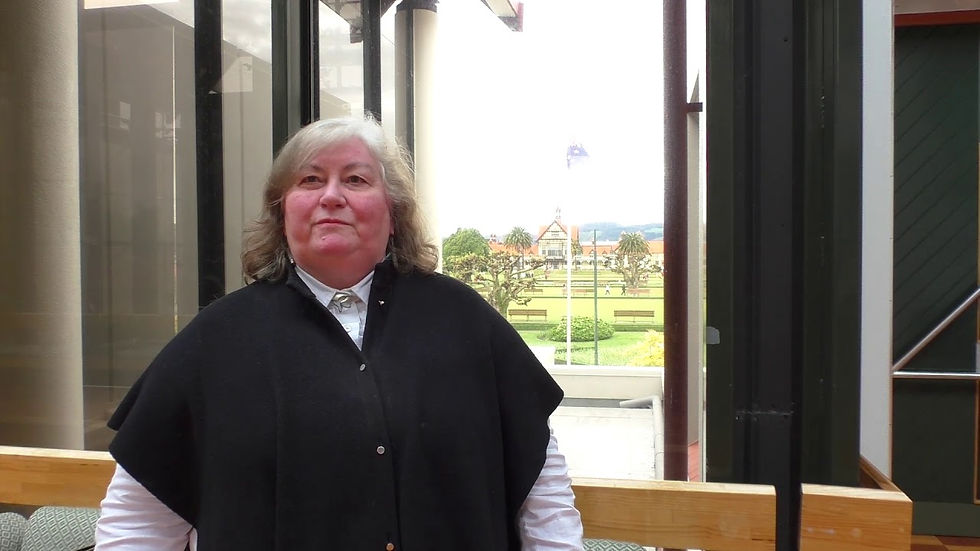
Robin Byron Heritage Advisor Auckland
Heritage New Zealand Pouhere Taonga is an autonomous Crown Entity under the Crown Entities Act 2004. We are supported by the Government and funded via Vote Arts, Culture and Heritage through the Ministry for Culture and Heritage. Our work, powers and functions are prescribed by the Heritage New Zealand Pouhere Taonga Act 2014.
Formerly known as the Historic Places Trust, we are co-governed by our Board and Māori Heritage Council and guided by Tapuwae.
Tairangahia a tua whakarere;Tātakihia ngā reanga o āmuri ake nei
Honouring the past; Inspiring the future
Whakatauākī gifted to Heritage New Zealand Pouhere Tāonga by Dame Rangimarie Naida Glavish DNZM JP
To provide collaborative leadership and bring meaning, life and connection to cultural heritage places of Aotearoa New Zealand.
Ko te pae tawhiti whāia kia tata; ko te pae tata, whakamaua kia tina.
Seek you the distant horizon to bring it close, the horizon that is close hold fast.
The Character Coalition, Sally Hughes
Sally Hughes is a passionate advocate for Auckland’s heritage and community identity. As Chair of the Character Coalition, she leads a network of more than 60 resident, heritage, and community groups united by a single goal: protecting the city’s unique character while embracing the growth it needs. Founded in 2016, the Coalition exists to safeguard Auckland’s distinctive built character, heritage buildings and special character areas.
Sally’s journey into heritage advocacy grew from a deep appreciation for Auckland’s built environment and the sense of belonging it provides. She has become a familiar voice in the city’s public debates, speaking on radio, writing submissions, and meeting with decision-makers to ensure that future development does not come at the cost of architectural quality or cultural memory.
Under her leadership, the Coalition played a pivotal role in shaping the Auckland Unitary Plan, securing protections for the city’s Special Character Areas. More recently, Sally has warned against poorly conceived housing intensification policies, cautioning that without good design standards Auckland risks creating “a legacy of bad housing for future generations.” Her advocacy stresses that development and preservation are not opposites but partners in building a vibrant, liveable city.
Known for her ability to bring people together, Sally has fostered collaboration among diverse groups, giving communities a stronger, unified voice. Her calm but determined style has earned her respect across local government, media, and grassroots networks.
For Sally, safeguarding character is about more than saving old houses — it is about protecting the stories, identities, and places that connect Aucklanders to their past and give meaning to their future.


Civic trust Auckland
Founder Margaret Newman
Our current patron is Hamish Keith CNZM OBE.
THE AIMS OF THE TRUST ARE:
-
Protection of natural landforms
-
Preservation of heritage, in all its aspects
-
Encouragement of good planning, for the City and Region
-
Removal of visual and environmental contamination
-
Publicising what we have and hope to achieve
“HERITAGE” INCLUDES:
-
Natural (landforms, sites, localities)
-
Built (buildings, fixed artifacts, street furniture)
-
Objects (sculpture, murals, vehicles, machinery)
-
Cultural / intangible (Maori, early settler, other historical, archeological, place names)
The purpose of this site is to inform of activities, publicise achievements by this Trust and others and provide a wide range of links to the diverse spread of organizations, which are either of importance in a general sense, or carry out activities, which can support the aims of Civic Trust Auckland.
DISCLAIMER:
The biographies of the finalist as presented are for information purposes only, and signify
the identified heritage values and do not serve as advice information. Any error or mistake will be
corrected as soon as possible within the limited period. The Heritage Awards aim is to educate the public
of the importance of heritage knowledge in establishing a cultural legacy of New Zealand/Aotearoa.
THANK YOU:
Acknowledge the support and assistance from Heritage NZ Pouhere Taonga and the Auckland Council Heritage
Festival staff for their input as with the Historic Places Auckland Committee.
REVIEW;
A full review of the first Auckland Heritage Awards events is sponsored by Historic Places Auckland. This will proceed. in one months’, time after the event, with a request for written feedback from participants.
A Historic Places Aotearoa Board member and a Justice of the Peace will judge any dispute resolution. All voting and nominating procedures results are Certified at the time by a Justice of the Peace.